Read entire PDF
Opens in new tab ↗️


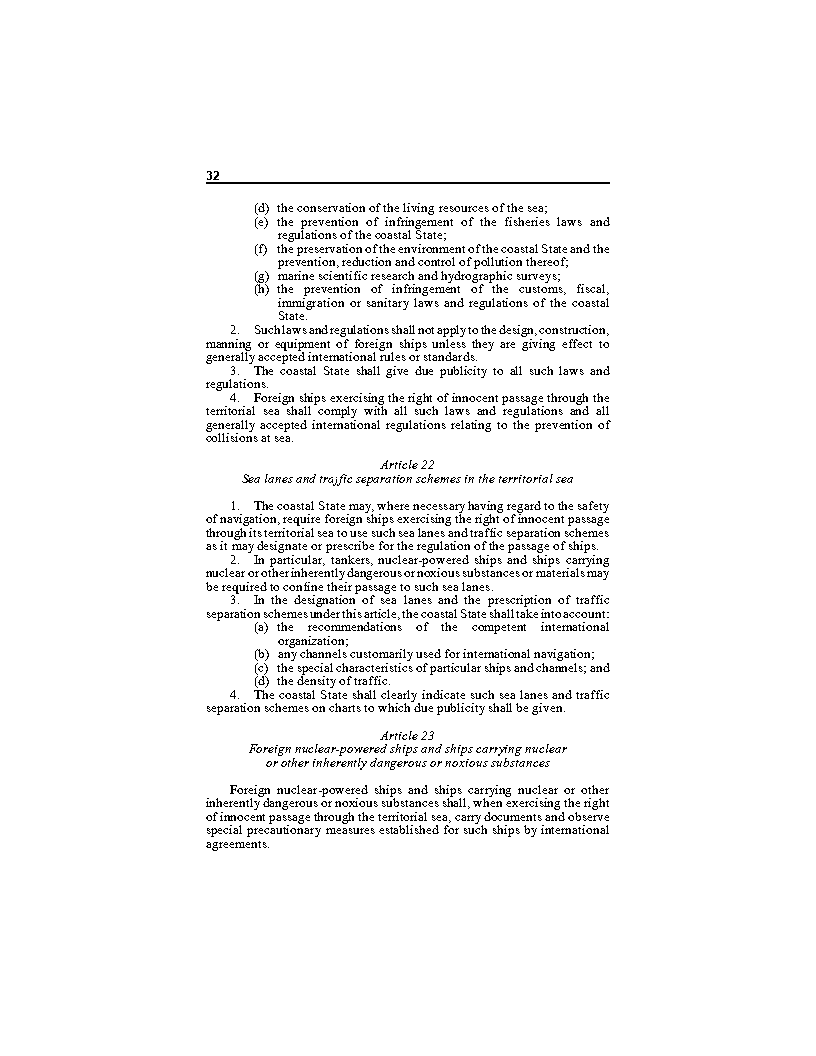
" Foreign nuclear-powered ships and ships carrying nuclear or other inherently dangerous or noxious substances shall, when exercising the right of innocent passage through the territorial sea, carry documents and observe special precautionary measures established for such ships by international agreements."
DEFINITION OF TERMS IN THIS CLAUSE
➡ Navigation which is not prejudicial to the peace, good order or security of the coastal State. i.e. navigation which does not pose any threat or use force against the sovereignty, territorial integrity or political independence of the coastal State, or in any other manner in violation of the principles of international law embodied in the Charter of the United Nations;
➡ Passage means navigation through the territorial sea for the purpose of: a) traversing that sea without entering internal waters or calling at a roadstead or port facility outside internal waters; or (b) proceeding to or from internal waters or a call at such roadstead or port facility.
➡ the salt water that covers most of the earth's surface and surrounds its continents and islands
➡ a large boat that carries people or goods across the seas or oceans




Please log in or register to access this content. Logging in will grant you acess to subscriber contents like unlimited access to our articles, glossaries, lexicons, quizzes, downloads, forum participation, etc.